
By Uswa Sports · 15 November 2026
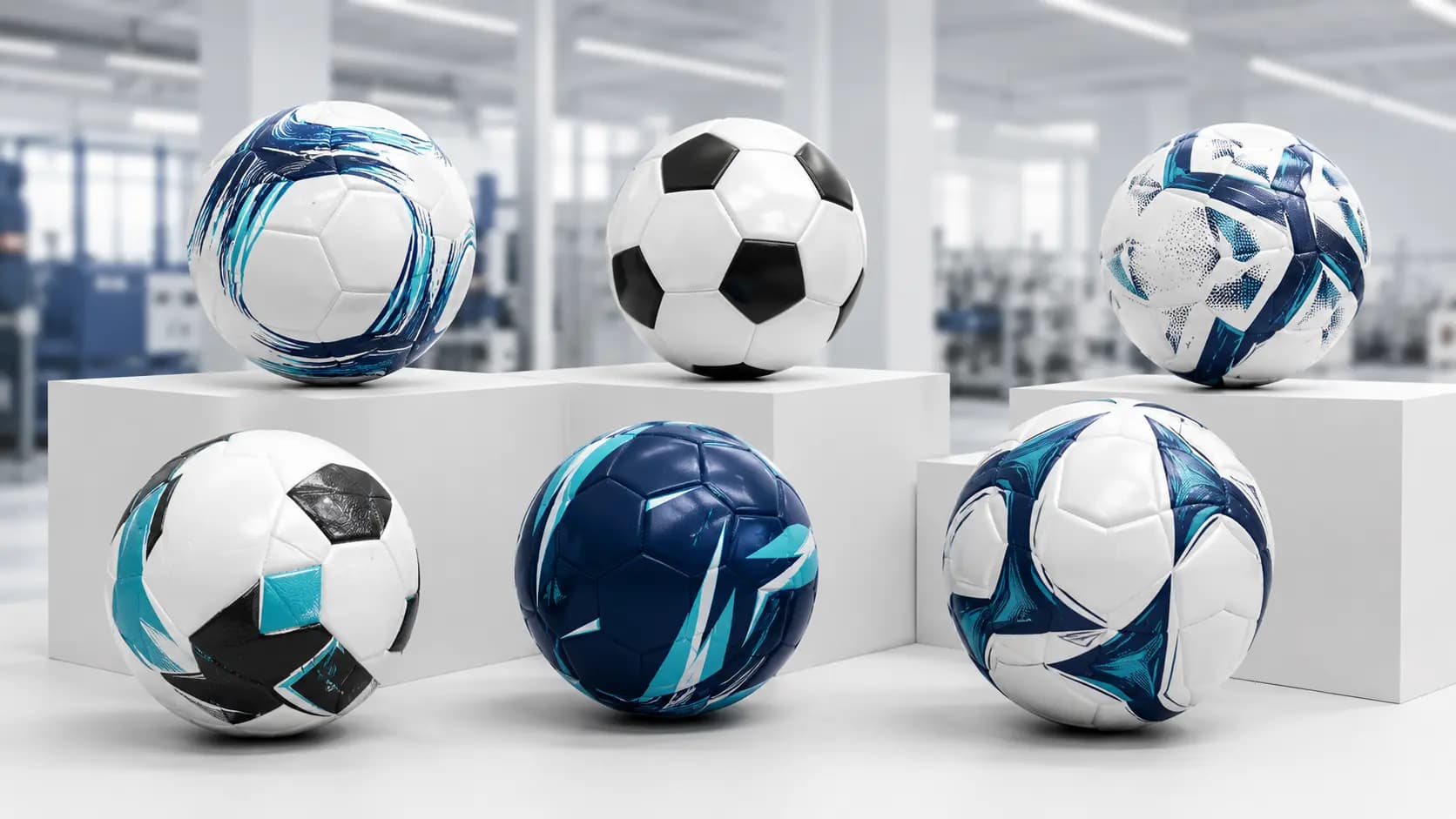
Using the right size ball matters more than most people think. A ball that is too big and heavy makes it hard for young players to dribble, pass and shoot properly, while a ball that is too small does not prepare older players for the real game. Here is how to pick the right size for every age.
Soccer ball size chart by age
| Ball size | Typical age | Age group | Used for |
|---|---|---|---|
| Size 1 | Any age | Skills / mini | Footwork practice, souvenirs, promotions |
| Size 2 | Under 4 | Toddlers | First balls, skills training |
| Size 3 | Under 8 | U4 to U8 | Mini-soccer and youngest leagues |
| Size 4 | 8 to 12 | U9 to U12 | Most youth leagues |
| Size 5 | 12 and over | U13 to adult | Youth, senior and professional football |
Soccer ball sizes and measurements
Each size is defined by its circumference and weight. The figures below are the commonly used ranges for each size. Size 5 matches the limits set out in Law 2 of the Laws of the Game.
| Size | Circumference | Weight | Notes |
|---|---|---|---|
| Size 1 | 46 to 51 cm (18 to 20 in) | About 200 g | Mini skills ball |
| Size 2 | 51 to 56 cm (20 to 22 in) | About 250 to 280 g | Toddler and skills ball |
| Size 3 | 58 to 61 cm (23 to 24 in) | 300 to 320 g | Under-8s |
| Size 4 | 63.5 to 66 cm (25 to 26 in) | 350 to 390 g | Ages 8 to 12 |
| Size 5 | 68 to 70 cm (27 to 28 in) | 410 to 450 g | Official size for 12+ and adults |
| Futsal | 62 to 64 cm (24.4 to 25.2 in) | 400 to 440 g | Size 4 with a low-bounce build |
What size soccer ball for each age?
Ages 3 to 5
A size 3 ball is the usual choice once children start playing in organised sessions. For toddlers just learning to kick, a lighter size 2 or a soft size 3 is easier to control and less likely to hurt.
Ages 6 to 7 (U6 to U8)
Size 3. It is small and light enough for young players to dribble and strike properly, which helps them build good technique early.
Ages 8 to 12 (U9 to U12)
Size 4. This is the most common youth size and is used by most leagues for players aged roughly 8 to 12. An 8-year-old moving from size 3 to size 4 will usually adapt within a few sessions.
Ages 12 and over (U13 to adult)
Size 5, the full-size ball used in senior and professional football. Some leagues introduce it at U12 and others at U13, so check your league's rules. Goalkeepers moving up to size 5 often need bigger gloves too; see our custom goalkeeper gloves for sizing from junior to adult.
What about futsal balls?
Futsal balls are close to a size 4 in diameter but heavier than a normal size 4, with a low-bounce build that keeps the ball on the floor on hard indoor courts. Adult futsal uses this ball, and younger players often use a smaller size 3 futsal ball.
How much air should a soccer ball have?
The Laws of the Game set match-ball pressure at 0.6 to 1.1 atmospheres at sea level, which is roughly 8.5 to 15.6 psi. Most balls have their recommended pressure printed near the valve, so follow that first. An over-inflated ball feels hard and bounces too much, while an under-inflated ball feels dead and wears out faster.
- Use a pressure gauge, not a squeeze test.
- Moisten the needle before inserting it to protect the valve.
- Check pressure before each session; all balls lose some air over time.
- Butyl bladders hold air much longer than latex bladders.
Choosing the right ball, not just the right size
Size is only half the story. How the ball is built decides how it feels and how long it lasts.
- Thermo-bonded balls have heat-fused panels, take on very little water and keep a consistent flight. Best for matches.
- Hand-stitched balls are durable and soft to the touch. Great for training and club use. Clubs can have them printed with their crest.
- Machine-stitched balls are the most affordable choice for schools, camps and casual play.
- PU covers feel softer and perform better; PVC covers are tougher and cheaper.
- Choose an abrasion-resistant cover for artificial turf and hard surfaces.