
By Uswa Sports · 26 November 2026
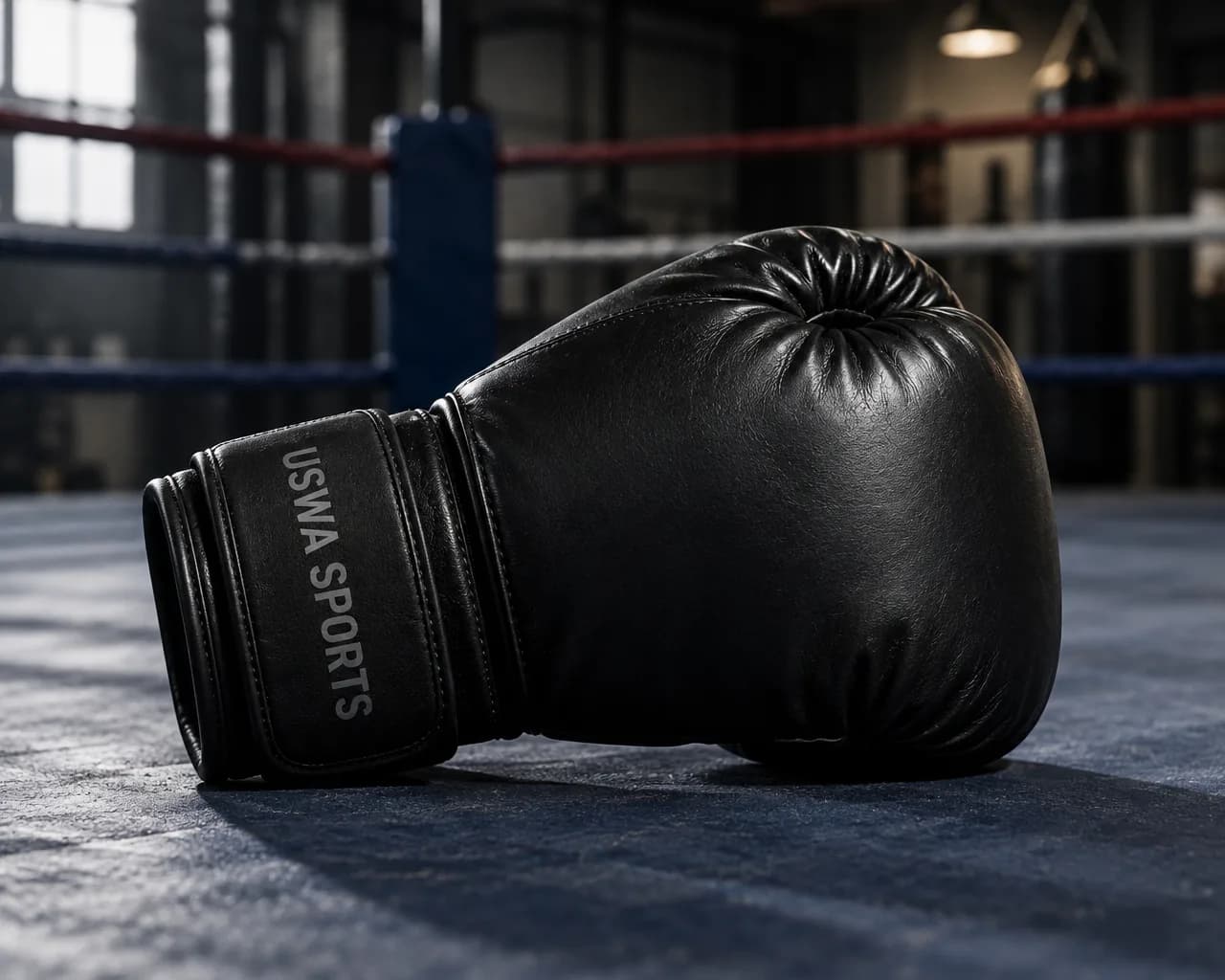
Boxing gloves protect your hands and your training partners. The right pair depends on what you use them for, your body weight, and how often you train. This guide explains glove weights, styles and materials, and what to look for when ordering gloves in bulk.
1. What glove weight do you need?
Boxing glove weight is measured in ounces (oz). Heavier gloves carry more padding, which protects both you and your partner. Use this table as a starting point and follow your coach's or club's rules.
| Glove weight | Typical use | Who it suits |
|---|---|---|
| 4oz to 8oz | Kids' training, light pad work | Children and juniors |
| 10oz | Bag and pad work, fitness classes | Lighter adults and juniors |
| 12oz | All-round training | Most women and lighter men |
| 14oz | Bag work and light sparring | Most adult men |
| 16oz | Sparring | Adults sparring, and heavier boxers for all training |
| 18oz and up | Heavyweight sparring | Heavier boxers |
2. Bag gloves, sparring gloves or all-rounders?
- Bag gloves have firmer padding to protect the knuckles on heavy bags and pads.
- Sparring gloves have softer, thicker padding to protect your partner.
- Training or all-round gloves sit in between and suit most club members and fitness classes.
- Competition gloves are lighter, follow governing-body rules and are usually supplied by the event.
3. Lace-up or hook-and-loop?
| Closure | Pros | Cons |
|---|---|---|
| Hook-and-loop (Velcro) | Quick on and off, no help needed | Slightly less snug at the wrist |
| Lace-up | Most secure, even fit | Needs someone to tie them |
| Hybrid | Laced fit with a strap over the top | Costs more to make |
4. Leather or synthetic?
Genuine cowhide or goatskin leather is durable, moulds to the hand over time and breathes well. Synthetic PU leather is lighter, cheaper and easy to wipe clean, which makes it popular for gyms and fitness classes where gloves are shared. Many clubs choose leather for their own boxers and synthetic for beginners and classes.
5. Padding and fit
- Layered or injection-moulded foam spreads impact evenly across the knuckles.
- A fixed, attached thumb reduces the risk of thumb injuries.
- Your hand, wearing hand wraps, should fill the glove with your fingers touching the end.
- A padded, firm wrist cuff helps keep the wrist straight when punching.
- Mesh or perforated palms help gloves dry and reduce odour.
Ordering custom boxing gloves for a club or brand
If you are kitting out a club or launching a glove line, ask for samples in each weight you plan to sell, and check the stitching, the thumb attachment, the padding density and how the logo is applied. Clubs often add custom MMA gloves, custom wrist wraps and team hoodies to the same order. For sourcing tips, read how to find a sportswear manufacturer.