
By Uswa Sports · 26 November 2026
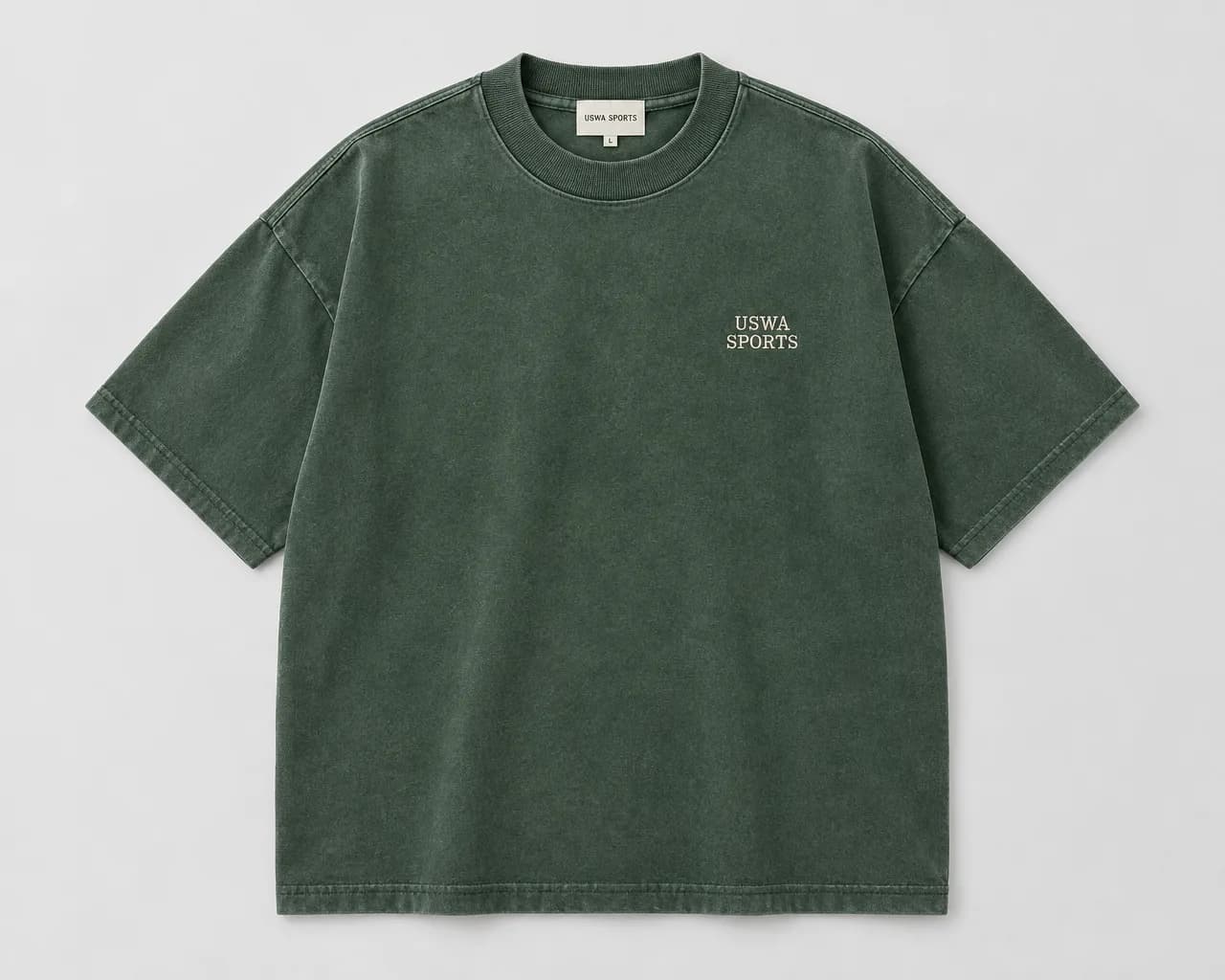
Heavyweight T-shirts feel thick, hold their shape and drape in a way that thin tees cannot. That is why streetwear and lifestyle brands build their core ranges around them. The key number is GSM, and this guide explains what it means and how to use it.
T-shirt weights compared
| Weight | GSM range | Feel and use |
|---|---|---|
| Lightweight | Under about 160 | Thin, soft and cool. Promo tees and summer basics |
| Midweight | About 160 to 220 | Everyday retail tees and merch |
| Heavyweight | About 220 to 260 | Thicker, more structured, premium basics |
| Super heavyweight | About 260 to 300+ | Very structured streetwear tees with a boxy drape |
Fabric and construction
- Combed or ring-spun cotton jersey feels smoother and pills less than open-end cotton.
- Tubular bodies have no side seams; side-seamed bodies allow more shaped fits and wider boxy cuts.
- A thick 1x1 rib collar, around 2 to 3 cm deep, keeps its shape after washing.
- Twin-needle hems and taped shoulders add durability.
Garment-dyed vs piece-dyed
Piece-dyed tees are cut from fabric that was dyed before sewing, which gives clean, consistent colour. Garment-dyed tees are sewn first and dyed afterwards, which gives a softer hand, a lived-in look and slight colour variation that many streetwear brands like. Garment dyeing also pre-shrinks the tee, so the final size is more predictable.
Fit: boxy, oversized or classic
- Boxy tees have a wide, slightly cropped body and dropped shoulders.
- Oversized tees are longer as well as wider, for a relaxed look.
- Classic heavyweight tees keep a regular fit with the weight and feel of thicker fabric.
What to check before you order
- Ask for the GSM before and after washing, as dyeing and washing change it.
- Request a size chart with chest, length, shoulder and sleeve measurements.
- Wash a sample several times and measure the shrinkage.
- Check the collar recovery and whether the side seams twist.
- Approve the colour on a physical swatch, not a screen.
- Test your decoration (embroidery, screen print or DTG) on the actual fabric.
For decoration options, see sublimation vs screen printing vs embroidery. For launch steps, read how to start an activewear brand. We also make oversized T-shirts and custom logo T-shirts.